
How Do You Write a Cover Letter? A Quick Guide
Want to improve your job application success rate? Discover how to write a cover letter that communicates confidence, clarity, and enthusiasm.
Many employers expect applicants to include a cover letter along with their CV or resume. Understanding how to write a cover letter helps you present your background, skills, and other relevant details more effectively.
By using a structured cover letter format, you can communicate your strengths to employers and make a strong first impression.
What is a Cover Letter and Why Use It?
A cover letter is a one-page professional document sent by one party (a job seeker) to another for purposes related to getting a job.
Related: How to Write a Good CV that Gets You Noticed
Why it matters:
- It demonstrates written communication/storytelling skills.
- It highlights logical and analytical skills.
- It offers a different angle that complements CVs/resumes.
- It demonstrates enthusiasm.
Types of Cover Letters
Different job situations require different styles of cover letters. Choosing the right type helps you communicate your purpose clearly and increases your chances of getting a response.
Job Application Cover Letter
This is the most common type of cover letter and the focus of this post. It is used when applying for a specific advertised job opening and typically submitted together with a CV or resume.
The goal of this letter is to explain why you are a good match for the role by connecting your experience, skills, and accomplishments to the employer’s requirements.
It should be tailored to the specific job and company to demonstrate that you understand what the employer is seeking.
Job application cover letters include career change cover letters and internship cover letters.
Prospecting Cover Letter
A prospecting cover letter is sent to a company that has not publicly announced a job opening.
You may send this letter if you are interested in working for a particular organisation and want to introduce yourself.
The purpose is to express your interest, highlight your qualifications, and inquire about potential current or future opportunities that align with your background.
Networking Cover Letter
This type of cover letter is used when reaching out to someone in your professional network, such as a former colleague, mentor, or industry contact.
Compared to other types, it is usually more conversational while still remaining professional.
The main objective is to reconnect, discuss your career interests, and request advice or information about possible job opportunities.
Referral Cover Letter
A referral cover letter is written when someone has recommended you for a job. This could be a current employee, manager, or professional contact at the company.
In this type of letter, you mention the person who referred you in the opening paragraph. Referrals can increase credibility and help your application gain attention.
Standard Cover Letter Structure
A strong cover letter should have some key sections. Each part has a specific purpose and helps create a professional, persuasive message for employers.
- Header section
- Greeting/salutation
- Opening paragraph
- Middle paragraph(s)
- Closing paragraph
- Sign-off
Step-by-Step: How to Write a Job Application Cover Letter That Wins
Writing excellent cover letters becomes easier when you follow a clear, professional structure. Be sure to research the company and job description thoroughly to have all the necessary information.
Below is a step-by-step approach that reflects best practices used by recruiters.
STEP 1: Start With a Strong Header
Include your name, contact details, location, and the date at the top of the page. Then list the employer’s details below. This improves organisation and presentation.
STEP 2: Use a Professional Greeting
Whenever possible, address the hiring manager by name. If the name is not available, “Dear Hiring Manager” is an appropriate alternative. Avoid overly generic greetings or outdated phrases like “To Whom It May Concern.”
STEP 3: Write a Clear Opening Paragraph
Introduce yourself and mention the position you are applying for. You should also state where you found the job advertisement and briefly explain why you are interested in the opportunity.
STEP 4: Highlight Relevant Skills and Achievements
In this part of the letter, focus on your most relevant skills, experiences, and accomplishments. Provide examples or measurable results whenever possible to demonstrate your impact.
STEP 5: End With a Confident Closing Paragraph
Restate your interest in the role, thank the employer for their time, and express your willingness to discuss the opportunity further.
STEP 6: Use a Professional Sign-Off
End the letter with a professional closing such as “Sincerely” or “Best regards,” followed by your full name.
Job Application Cover Letter Examples
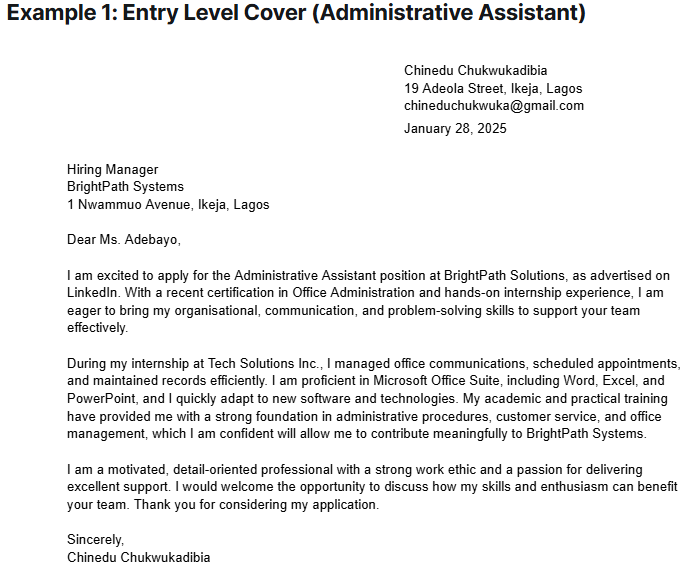
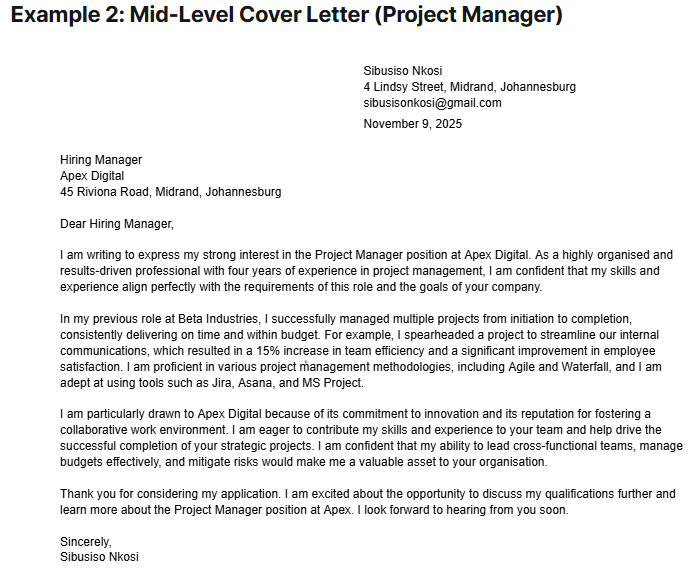
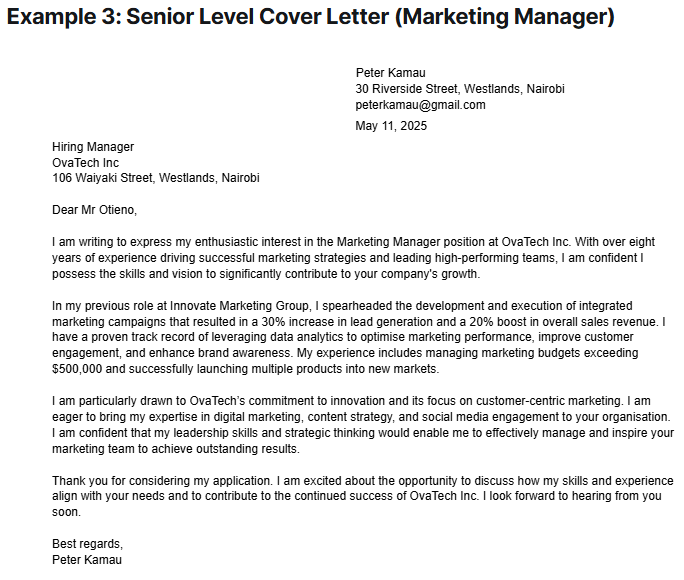
More cover letter examples here.
Job Application Cover Letter Mistakes to Avoid
Even strong candidates can reduce their chances of success by making simple but avoidable mistakes. When preparing a cover letter, try to avoid the following:
- Sending the same generic cover letter to multiple employers without making necessary changes for each application.
- Writing overly long cover letters with unfocused paragraphs (in most cases, one page is sufficient regardless of experience level).
- Not customising the letter to match the specific role and company.
- Submitting a cover letter that contains spelling or grammatical mistakes.
- Including information that conflicts with details in your CV or resume.
- Failing to include relevant keywords that can improve compatibility with ATS screening.
Conlusion
Mastering how to write a cover letter can make a meaningful difference in your job search. A focused and personalised letter helps employers see the value you can bring to their organisation.