
How to Write an Application Letter for a Job [A Guide]
This guide walks you through what an application letter is, when you need one, and how to write a strong one step by step.
![How to Write an Application Letter for a Job [A Guide]](/blog/content/images/size/w2000/2026/08/how-to-write-an-application-letter-for-a-job.png)
An application letter is often the first thing an employer reads about you, and it can decide whether your CV gets a closer look or gets set aside. The good news is that writing one is a skill anyone can learn.
Overview of an Application Letter
An application letter, sometimes called a cover letter, is a document you send to an employer to express your interest in a specific job. It introduces you, explains why you are applying, and highlights why you are a good fit for the role.
The purpose of an application letter is to connect your skills and experience to what the employer is looking for. It gives context to your CV and lets you speak directly to the hiring manager in your own voice.
It helps to understand the difference between an application letter and a CV. Your CV is a structured summary of your education, work history, and skills. Your application letter is a short, persuasive message that explains how those qualifications solve the employer's needs. The CV shows what you have done; the letter explains why it matters for this job.
When You Need to Write an Application Letter
You do not always need an application letter, but there are common situations where one is expected or helpful. Here are situations when you do need to write an application letter for a job;
When the Employer specifically requests it
Write an application for the job you're applying for if the employer specifically requests it in the job advert, as skipping it may cost you the opportunity.
When applying by email or sending your application directly to an organisation
When applying for a job by email, the letter often serves as the body of your email. When sending your application directly to an organisation you need to also write an accompanying application letter. If there is no formal application form to fill in, the letter becomes your main introduction.
To explain your suitability beyond your CV
Finally, write one whenever you want to explain your suitability beyond what your CV can show, such as a career change or a gap in employment.
What to do Before Writing Your Application Letter
Preparation makes writing much easier.
Start by reading the job description carefully so you understand exactly what the role involves and what the employer values most.
Next, research the employer.
Look at their website or social media to understand what they do and what matters to them. This helps you tailor your letter and show genuine interest.
Then identify the key skills and qualifications the employer wants
These are usually listed in the job advert/details.
Finally, gather your relevant achievements and experience
Go through your relevant achievements and experience and have concrete examples ready to include, rather than vague claims.
Structure of a Good Application Letter
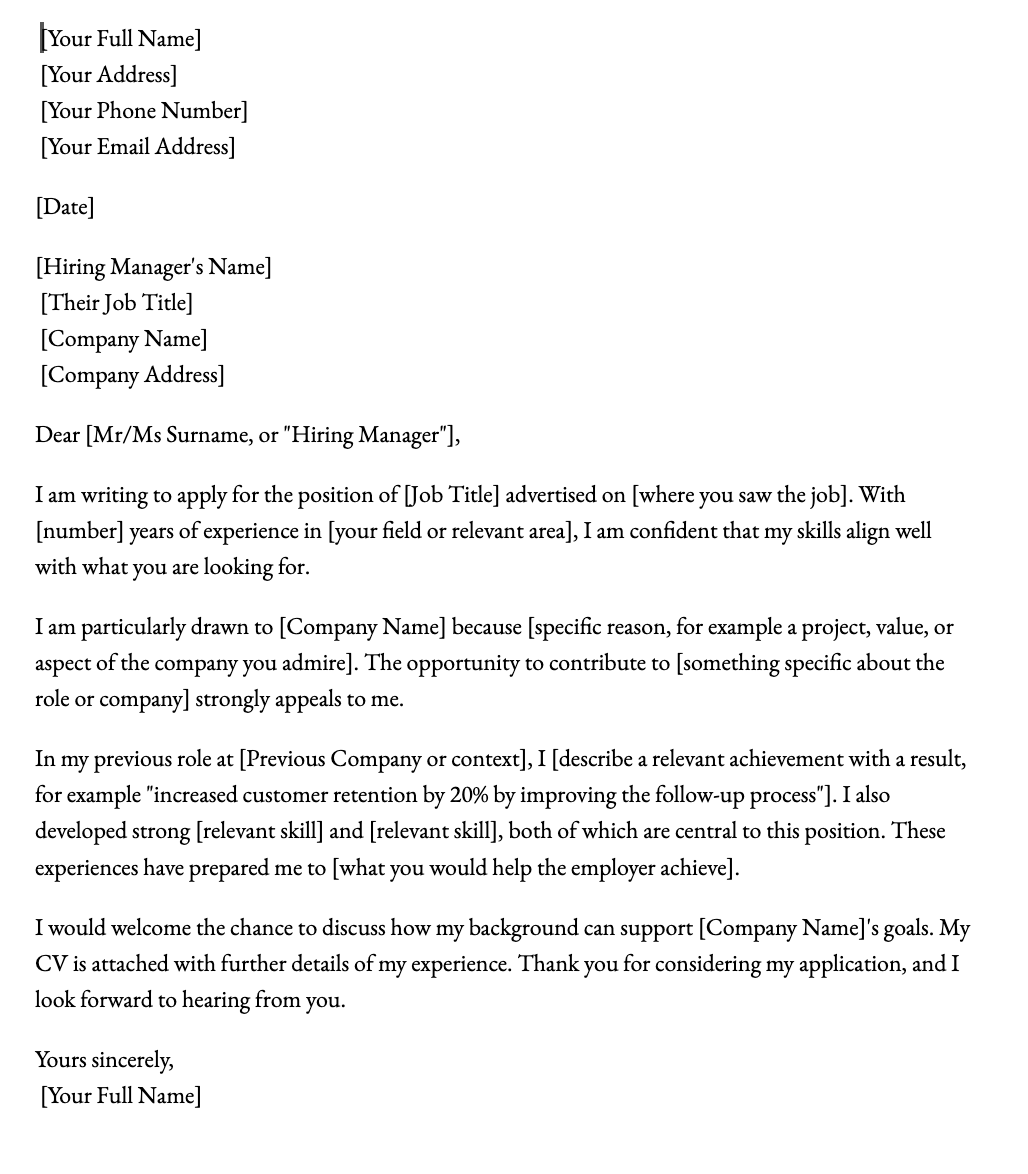
A clear structure makes your letter easy to read. A standard application letter includes your contact information at the top, followed by the date. Below that, add the employer's details, such as the hiring manager's name, title, and company address.
Next comes the salutation or greeting, then your opening paragraph introducing yourself and the role. The main body follows, where you explain your suitability, and then a closing paragraph that restates your interest and invites a response. End with a professional sign-off and your name. See example application letter for a job below;
Step-by-Step: How to Write an Application Letter
See below simple steps to guide you on how to write an excellent job application letter.
Start with the correct greeting.
Address the hiring manager by name if you can find it, for example "Dear Mr Bello." If you cannot find a name, use "Dear Hiring Manager" rather than an outdated greeting like "To Whom It May Concern."
Introduce yourself and state the position.
In your first sentence, mention the exact job title and where you saw it advertised so the reader knows immediately why you are writing.
Explain why you are interested.
Briefly say what attracts you to the role or the organisation. This shows you are applying with intention, not sending the same letter everywhere.
Demonstrate your relevant skills and experience.
Pick two or three qualifications that match the job requirements and back them up with short, specific examples. Focus on results you achieved rather than just listing duties.
Show what you can contribute.
Make it clear how your skills will benefit the employer going forward, not only what you have done in the past. Employers want to know how you will help them.
Close professionally.
Thank the reader for their time, express your interest in discussing the role further, and mention that your CV is attached.
What to Include and What to Avoid in Your Application Letter
Here are a few important things to note; what to include or avoid while writing your application letter for any job.
Keep your letter relevant and specific to the job in front of you. Avoid repeating your CV word for word; instead, expand on a few key points and add context the CV cannot provide.
Steer clear of generic statements. Don't use generic statements that could apply to any job or that don't have any relevance to the particular job in focus
Don't include unnecessary personal details. Leave out unnecessary personal information such as age, marital status, or unrelated hobbies.
Keep the letter to one page. An application letter should not exceed one page no matter how many things you think you want to say.
Finally, check your grammar, spelling, and formatting carefully. Errors can create a poor first impression so be sure to review/edit your application letter before sending it out.
Final Checklist Before Submitting
Before you send your application, run through this quick checklist;
- Confirm you have the correct job title and employer name, with no leftover details from a previous application.
- Make sure you included relevant examples rather than vague claims.
- Check that your tone is professional and warm throughout.
- Confirm the correct attachments, such as your CV, are included.
- Then proofread the whole letter once more, ideally reading it aloud or asking someone else to review it.
Conclusion
A strong application letter does one thing well, it connects your experience and skills to the employer's needs. When you research the role, tailor your message, and back your claims with real examples, you turn a simple letter into a genuine opportunity to stand out. Keep it clear, honest, and focused on how you can help, and you will give yourself the best possible chance of landing an interview.