
2026 South Africa Remote Job Report
In 2026, remote work in South Africa has shifted from a pandemic response to a long-term option. This report explores the state of remote work in South Africa in 2026 and predicts what remote work will look like in the country beyond 2026.
South Africa has long been one of Africa’s leading economic powers. That huge and diversified economy is valued at USD 401 billion in 2024, the largest on the continent presently. Before the COVID-19 pandemic, the country’s labour market was largely office-centric, with remote work viewed as an exception rather than a mainstream employment model.
Find remote work in South Africa
Flexible work arrangements existed in the country of 63.1 million people then, but they were limited to specific sectors, and adoption was slow. The arrival of COVID-19 around 2020 fundamentally changed this trajectory, accelerating the adoption of digital tools and remote working practices across industries. What began as a crisis response evolved into a lasting shift in how work is organised and delivered.
Against this backdrop, the South Africa remote job report 2026 examines the evolving landscape of remote jobs in South Africa in 2026 from various angles.
2026 Remote Work Trends in South Africa
In 2026, South Africa has positioned itself as a compelling remote work and digital nomad destination, blending opportunity with lifestyle. A major catalyst is the recently introduced Remote Work or Digital Nomad Visa.
This visa lets foreign workers live in South Africa while working online for overseas employers, potentially boosting local tourism and business spending as they dine, stay and work in cities like Cape Town and beyond. Industry voices highlight that such remote workers can contribute sustained economic activity, which can help the industry thrive and create more jobs.
Cape Town, in particular, has gained attention as a top global remote work hub, ranking among the top 30 international cities for long-term remote workers. The town is supported by world-class infrastructure, strong internet connectivity and the highest quality of life in Africa. It boasts beaches, cafes and coworking spaces that appeal to global remote talent.
Top In-Demand Remote Jobs in South Africa and Their Salaries
Source: Payscale
Challenges Facing South African Remote Workers
Not every town in South Africa is as developed as Cape Town and other big cities, such as Johannesburg. Remote work in some locations in the country continues to be constrained by infrastructure challenges, most notably unreliable electricity supply and uneven internet connectivity.
Load shedding disrupts working hours, virtual meetings and productivity, often forcing remote workers to incur additional costs for backup power. At the same time, broadband access remains concentrated in urban areas, leaving rural and lower-income communities at a disadvantage. These structural barriers limit who can realistically participate in remote work, reinforcing existing inequalities.
A second major challenge lies in the skills gap within the labour market. Many remote-friendly jobs require digital, ICT and professional skills that large segments of the workforce do not yet possess.
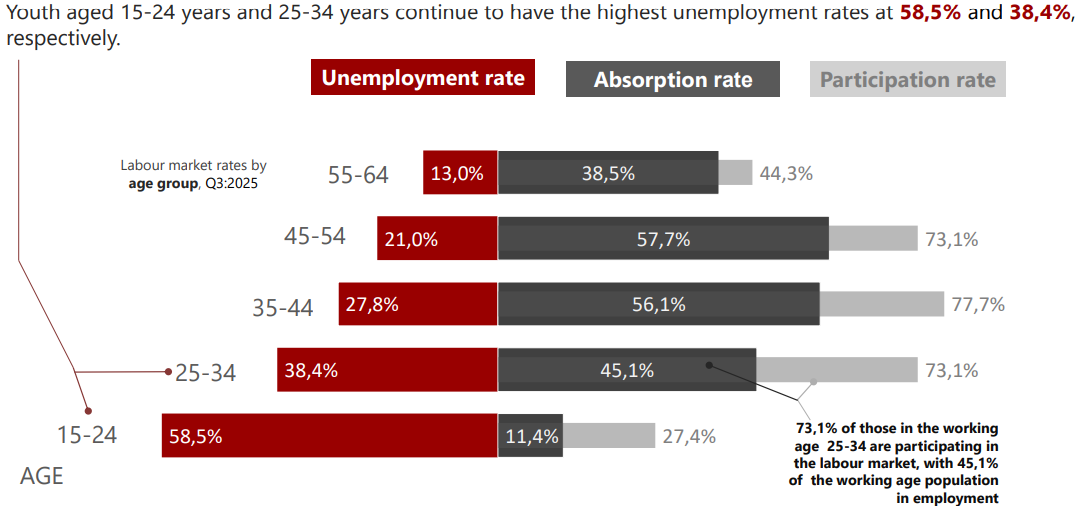
High unemployment intensifies competition for remote roles, raising entry requirements even further. As a result, many remote jobs in South Africa in 2025 remain accessible mainly to digitally literate workers with prior training and experience.
Efforts to Address the Challenges
To address infrastructure constraints, the government has not only prioritised electric power supply improvements but also digital connectivity expansion through national broadband programmes such as SA Connect. Such initiatives focus on extending affordable internet access to households, schools and public facilities, particularly in underserved areas.
Improved connectivity is intended to support economic participation, including remote and digital work. These investments aim to create the foundational conditions needed for broader inclusion in the remote economy.
Alongside connectivity, government and industry partners are also investing in digital skills development to improve workforce readiness. National digital skills strategies and sector-specific training programmes target youth and unemployed individuals with training in coding, ICT, and digital literacy.
These programmes seek to align workforce capabilities with the needs of a modern, technology-driven job market. Over time, such efforts are expected to widen access to remote work and reduce skills-based exclusion.
There's also public-private dialogue on attracting global digital talent and boosting critical skills through revamped visa categories and points-based systems. This signals that growth in remote work opportunities could strengthen as South Africa’s connectivity, skills base and global competitiveness improve over the next few years.
Future Outlook
South Africa’s remote job market has already undergone significant transformation, driven by technological adoption, evolving employer attitudes, and the lingering economic impacts of the COVID-19 pandemic.
As deeper structural changes take hold and the country positions itself within the broader global knowledge economy, remote work in South Africa will continue to expand across sectors previously dominated by physical presence.
Information technology leads the way in remote work adoption, followed by business and management, sales, admin, office and support, finance, architecture and engineering, marketing, design, media and arts, education, training and library, manufacturing and assembly.
A key driver of future growth will be the integration of advanced digital infrastructure. South Africa’s ongoing expansion of broadband access, including 5G rollouts in urban centres and improved connectivity in rural areas, will reduce historical barriers to remote participation.
As internet reliability improves, more South Africans will access job opportunities previously limited to major metropolitan centres, narrowing geographic disparities in employment.
Another major trend will be the blurring of lines between local and global remote work. South African talent, known for strong English proficiency and technical skills, is increasingly attractive to international employers seeking cost-effective, skilled remote workers.
This trend is projected to accelerate post-2026, positioning South Africa as a significant hub in the global remote talent ecosystem. Platforms that connect freelancers with overseas clients will grow, and hybrid models will witness increased adoption.
However, the future isn’t without challenges. For example, labour issues will continue to require attention from both employers and policymakers. Ensuring fair compensation, protecting worker rights, and building trust in remote assessment and productivity standards will be central debates in the coming decade.
In sum, beyond 2026, remote jobs in South Africa are poised not just to grow but to transform the nature of work itself, expanding opportunities, challenging traditional workplace norms, and embedding the nation more deeply within the global digital economy.