
2026 Nigeria Remote Job Report
In 2026, remote work in Nigeria has moved beyond experimentation into wider adoption. This report reviews the state of remote jobs in Nigeria and discusses what the future of remote work in the country may look like beyond 2026.
Nigeria is presently Africa’s fourth-largest economy and most populous nation, with an estimated GDP of around USD 252 billion in 2024 and a population exceeding 225 million people. The oil and gas-rich country plays a central role in Africa’s economic, cultural, and technological landscape and is widely recognised for its dynamic entrepreneurship, large tech-savvy youth population, and fast-growing digital economy.
Before COVID-19, flexible work arrangements were limited, informal, and largely restricted to multinational firms, few startups, and freelance professionals in major cities such as Lagos and Abuja.
As was the case all over the world, the emergence of the pandemic in 2020 significantly altered work practices across Nigeria. Lockdowns, mobility restrictions, and business continuity needs forced many organisations to adopt digital tools and experiment with remote or hybrid work models. Both models have since evolved from a temporary response to the pandemic to a more permanent shift, reshaping how work is organised, delivered, and experienced across the country.
The Nigeria Remote Job Report 2026 examines the current state of remote jobs in Nigeria, highlighting emerging trends, the most in-demand roles, key challenges facing Nigerian remote workers, efforts to tackle these challenges and the future of remote work in the country.
2026 Remote Work Trends in Nigeria
Nigeria remains among Africa's leading sources of remote talent in 2026, driven by its large, digitally active population, policydirection from government and growing integration into the global digital economy. While Nigeria is not yet positioned as a remote work destination in the way some Western countries are, it has become a significant exporter of remote talent.
Nigeria’s remote work growth is closely tied to its expanding tech ecosystem, especially in urban areas such as Lagos, the second-largest city economy in Africa. The city, often described as the continent’s startup capital, hosts a dense concentration of tech startups, fintech companies, multinational firms, and digital service providers supported by relatively strong broadband infrastructure, international connectivity, and an active coworking culture.
Beyond Lagos, other cities such as the capital city Abuja, Port Harcourt, Onitsha, Ibadan, Benin City, and Enugu are increasingly participating in Nigeria’s remote work ecosystem. Improved mobile broadband coverage and rising smartphone adoption in these and other cities are encouraging more professionals to pursue remote and hybrid work opportunities outside traditional commercial hubs.
A defining trend in Nigeria’s remote work landscape is the strong orientation toward international employers and clients. Many Nigerian professionals work remotely for companies abroad (especially in Europe, North America, and Asia), attracted by higher pay, foreign currency earnings, and access to global career opportunities.
Overall, Nigeria’s combination of scale, digital talent, English proficiency, and entrepreneurial culture positions it as one of Africa’s most important remote talent markets in 2026.
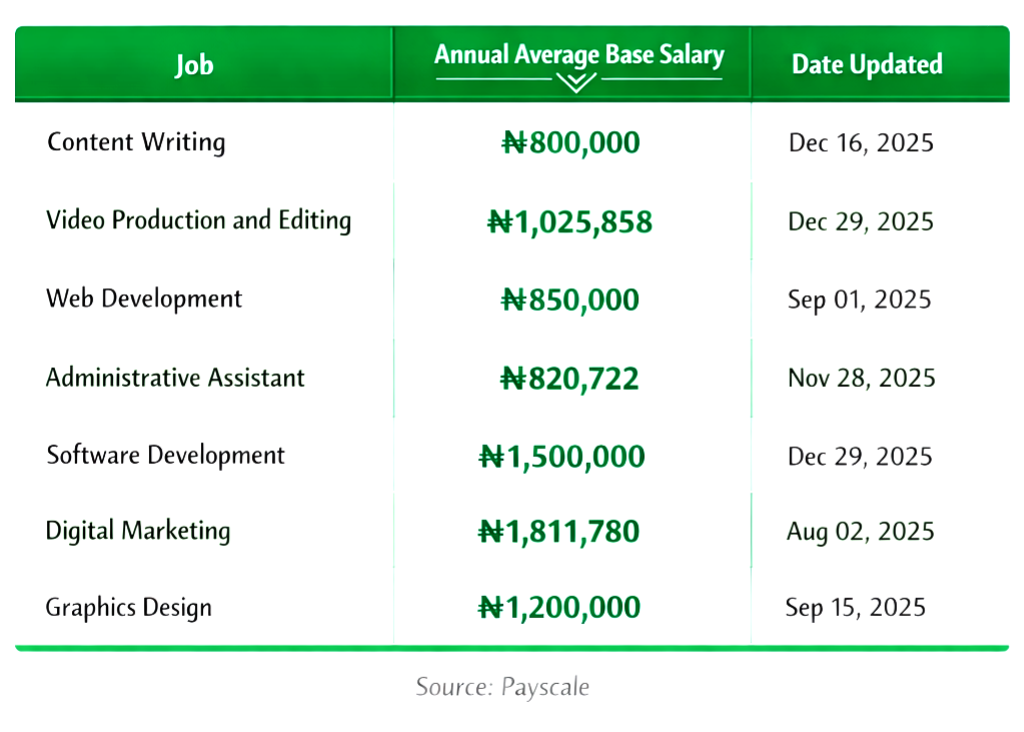
Top In-Demand Remote Jobs in Nigeria and Their Salaries
Challenges Facing Nigerian Remote Workers
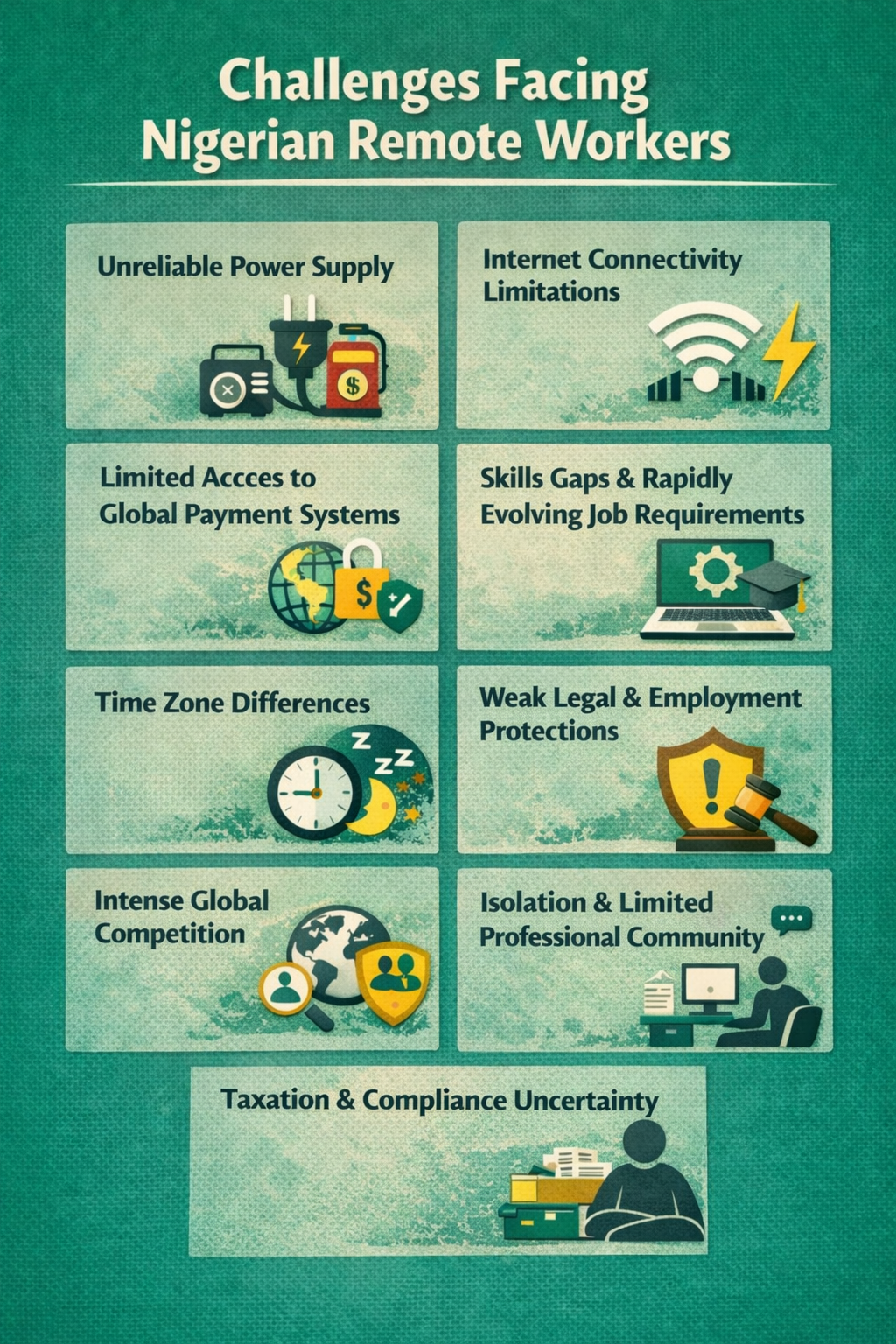
Despite the expansion of remote jobs in Nigeria, remote workers continue to face several persistent challenges:
Unreliable power supply
Frequent electricity outages remain one of the biggest obstacles to consistent remote work. Many workers rely on generators, inverters, or solar solutions, increasing operating costs and reducing productivity.
Internet connectivity limitations
Although mobile internet coverage has improved, especially in cities, issues such as slow speeds, network congestion, and high data costs continue to affect meeting reliability and task delivery, especially outside major cities.
Limited access to global payment systems
Some international payment platforms and employer-preferred tools are not fully accessible in Nigeria and other parts of Africa. Remote workers often face delays, high transaction fees, and unfavourable exchange rates when receiving payments.
Skills gaps and rapidly evolving job requirements
Global remote roles increasingly require advanced technical, analytical, and digital communication skills. Many struggle to keep pace without affordable, high-quality upskilling opportunities.
Time zone differences
Working with employers in different time zones, such as those in North America, Europe, or Asia, can require irregular hours, leading to fatigue, poor work–life balance, and long-term burnout.
Weak legal and employment protections
Most Nigerian remote workers operate as freelancers or independent contractors, often without health insurance, paid leave, or clear dispute-resolution mechanisms.
Intense global competition
Nigerian professionals compete with talent from other emerging markets, which can pressure wages and make long-term contracts harder to secure.
Isolation and a limited professional community
Remote work can be socially isolating, particularly for freelancers working from home without access to collaborative or mentoring environments.
Taxation and compliance uncertainty
Many remote workers remain unsure about tax obligations, business registration, and compliance when earning foreign income.
Efforts to Address the Challenges
Several initiatives by government bodies, private organisations, and the tech ecosystem are helping to reduce barriers to remote work in Nigeria.
Government Investment in Digital Infrastructure
Federal initiatives such as the National Broadband Plan, alongside state-level digital economy strategies, aim to expand broadband penetration, reduce data costs, and improve nationwide connectivity.
Digital Skills and Workforce Training
Public and private training programmes focusing on software development, data analysis, digital marketing, and online freelancing are equipping Nigerians with skills aligned to global remote work demand.
One public sector example is the National Information Technology Development Agency (NITDA), which runs nationwide digital skills initiatives under the National Digital Economy Policy and Strategy. The programme aims to equip youth and professionals with practical, job-ready tech skills.
An example in the private sector is Andela, which provides advanced training and career pathways in software engineering and related digital roles, preparing Nigerian talent for remote opportunities with international companies.
Growth of Trusted Remote Job Platforms
Platforms such as Remote4Africa play a key role by curating verified remote opportunities for Africa-based talent, reducing exposure to job scams and low-quality listings.
Expansion of Fintech and Payment Solutions
Fintech providers such as Payoneer, Wise, Skrill, Flutterwave, and Paystack enable Nigerian remote workers to receive international payments more reliably and manage income locally.
Rise of Coworking Spaces
Coworking hubs in Lagos, Abuja, and other cities provide stable internet, backup power, and professional communities, helping remote workers overcome isolation and infrastructure challenges.
Gradual Policy Recognition
Nigeria’s broader digital economy policies increasingly recognise online work, freelancing, and digital services as legitimate contributors to national growth, laying the groundwork for clearer future regulation.
For instance, tax reforms introduced in June 2025 widened Nigeria’s personal income tax net to include earnings from remote work.
Future Outlook
Nigeria’s remote job market has evolved rapidly, shaped by digital adoption, global talent demand, and economic shifts accelerated by the COVID-19 pandemic. As Africa’s largest labour market, Nigeria is expected to play an increasingly influential role in the continent’s remote work ecosystem.
Technology will remain at the forefront of remote work adoption, while several niches, including finance, sales, content writing, marketing, design, media, education, and administrative support, will also witness expansion. The diversity of roles reflects broader Nigerian remote work capacity with opportunities spanning both highly experienced, mid-level and student or entry-level positions.
Continued investment in broadband infrastructure, power reliability, and digital skills development will be critical to expanding access to remote jobs beyond major cities. Improved connectivity will allow more Nigerians to participate in global work opportunities, helping reduce regional employment disparities.
There is also a need for stronger labour protections, clearer tax frameworks, fair compensation practices, and additional reliable payment systems. Addressing these issues will be essential to ensuring that remote work delivers long-term economic and social benefits.
It is expected that Nigerian professionals will continue to become more visible in global remote talent networks. Qualities like strong English language proficiency, adaptability, and experience in tech and service roles will enable them to keep attracting international employers seeking remote teams.
In summary, beyond 2026, remote jobs in Nigeria are expected not only to grow in number but to reshape how work is organised and delivered. This evolution will strengthen Nigeria’s position as a major contributor to the global digital talent economy and redefine employment opportunities for millions of Nigerians.